
 Home
Home

A chopped chin is not just a cosmetic concern. It can signal underlying skeletal imbalance, dental misalignment, or muscle dysfunction. Some people notice it in photos, others experience jaw discomfort or speech issues. Understanding the cause determines the right fix.
Table of Contents
What Is a Chopped Chin
A chopped chin refers to an uneven, indented, or segmented appearance of the chin. It may look flattened, divided, or asymmetrical.From an anatomical perspective, it often involves the Mandible, chin muscles, or dental alignment.
Why a Chopped Chin Matters
A chopped chin can affect more than appearance.
Functional implications include:
- Bite misalignment
- Jaw tension or TMJ symptoms
- Speech articulation issues
- Facial asymmetry progression
From an aesthetic standpoint, it impacts facial harmony and profile balance.
Common Causes of a Chopped Chin
Skeletal Causes
- Uneven mandibular growth
- Congenital jaw deformities
- Post-trauma bone healing
Dental & Orthodontic Causes
- Malocclusion (overbite or underbite)
- Poor orthodontic outcomes
- Missing teeth altering jaw support
Muscular Causes
- Overactive mentalis muscle
- Facial nerve imbalance
Medical & Surgical History
- Previous chin surgery
- Incomplete genioplasty correction
How a Chopped Chin Is Diagnosed
Clinical evaluation typically includes:
- Facial symmetry assessment
- Bite and occlusion analysis
- X-rays or CBCT scans
- Muscle movement observation
Diagnosis may involve a dentist, orthodontist, or maxillofacial surgeon.
Types of Chopped Chin Deformities
| Type | Description | Common Solution |
| Vertical Split | Central indentation | Fillers or genioplasty |
| Asymmetrical Chin | One side protrudes | Orthognathic correction |
| Recessed & Chopped | Flat lower face | Chin implant or advancement |
| Post-Surgical Chop | Irregular healing | Revision surgery |
Treatment Options
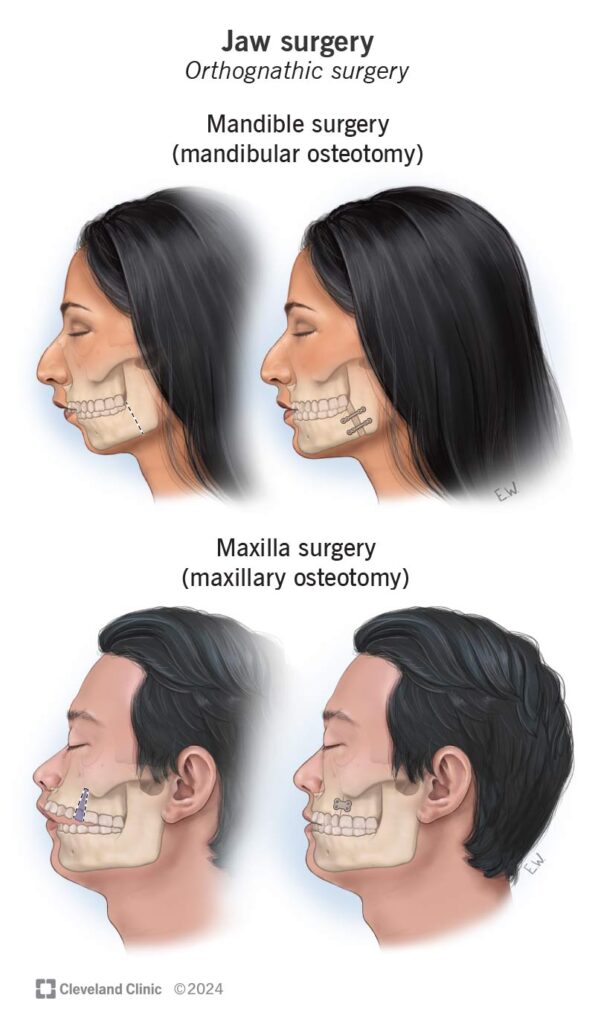
Non-Surgical Treatments
Best for mild cases
- Hyaluronic acid chin fillers
- Botox for muscle imbalance
- Orthodontic bite correction
Pros
- No downtime
- Lower cost
- Reversible
Cons
- Temporary
- Limited structural correction
Surgical Treatments
Used for moderate to severe cases
- Sliding genioplasty
- Orthognathic surgery
- Chin implants
Pros
- Permanent results
- Functional correction
Cons
- Higher cost
- Surgical risks
- Recovery time
Non-Surgical vs Surgical Decision Framework
Choose non-surgical if:
- Deformity is cosmetic only
- No bite or speech issues
- You want temporary enhancement
Choose surgical if:
- Functional problems exist
- Chin asymmetry affects jaw alignment
- Prior treatments failed
Costs, Risks, and Recovery
| Treatment | Cost Range* | Recovery |
| Fillers | $600–$1,200 | Same day |
| Orthodontics | $3,000–$7,000 | Months |
| Genioplasty | $6,000–$15,000 | 2–6 weeks |
| Orthognathic Surgery | $20,000+ | 6–12 weeks |
*Costs vary by region and provider. (Source: Industry Estimates)
Local Treatment Considerations
If you search “chopped chin treatment near me,” results vary by region.
Urban centers often offer:
- Board-certified maxillofacial surgeons
- Advanced imaging facilities
Regional factors
- Pricing varies by city
- Insurance may cover functional correction
- Cosmetic procedures usually self-pay
Common Mistakes to Avoid
- Treating structural issues with fillers only
- Skipping bite evaluation
- Choosing non-specialist providers
- Ignoring long-term facial balance
Alternatives and Preventive Options
- Early orthodontic intervention
- Myofunctional therapy
- Jaw posture correction in adolescence
Entity Glossary
- Mandible: The lower jawbone forming the chin
- Sliding genioplasty: Surgical repositioning of the chin bone
- Orthognathic surgery: Corrective jaw surgery
People Also Ask (FAQs)
Is a chopped chin genetic?
Yes. Many cases result from inherited jaw structure.
Can fillers fix a chopped chin permanently?
No. Fillers are temporary and cosmetic only.
Is a chopped chin a medical condition?
Sometimes. Functional issues may classify it as medical.
Does orthodontics help?
Yes, if bite alignment contributes to the chin shape.
Is surgery always required?
No. Mild cases respond well to non-surgical options.
Does insurance cover correction?
Only when functional problems exist.
Can a chopped chin get worse with age?
Yes. Bone resorption and muscle changes can worsen it.
AI Overview Trigger Q&A
What causes a chopped chin?
Bone asymmetry, muscle imbalance, dental issues, or trauma.
How do you fix a chopped chin?
Treatment depends on severity. Options include fillers, orthodontics, or surgery.
Is chopped chin correction safe?
Yes, when performed by qualified specialists.
Who should treat a chopped chin?
Dentists, orthodontists, or maxillofacial surgeons.
When should treatment be considered?
When function, appearance, or confidence is affected.
Conclusion: What to Do Next
A chopped chin is not one-size-fits-all. Start with proper diagnosis. Address functional issues first, then aesthetics. Avoid quick fixes for structural problems. Long-term facial balance always wins.