
 Home
Home

Introduction: why formulation clarity improves research outcomes
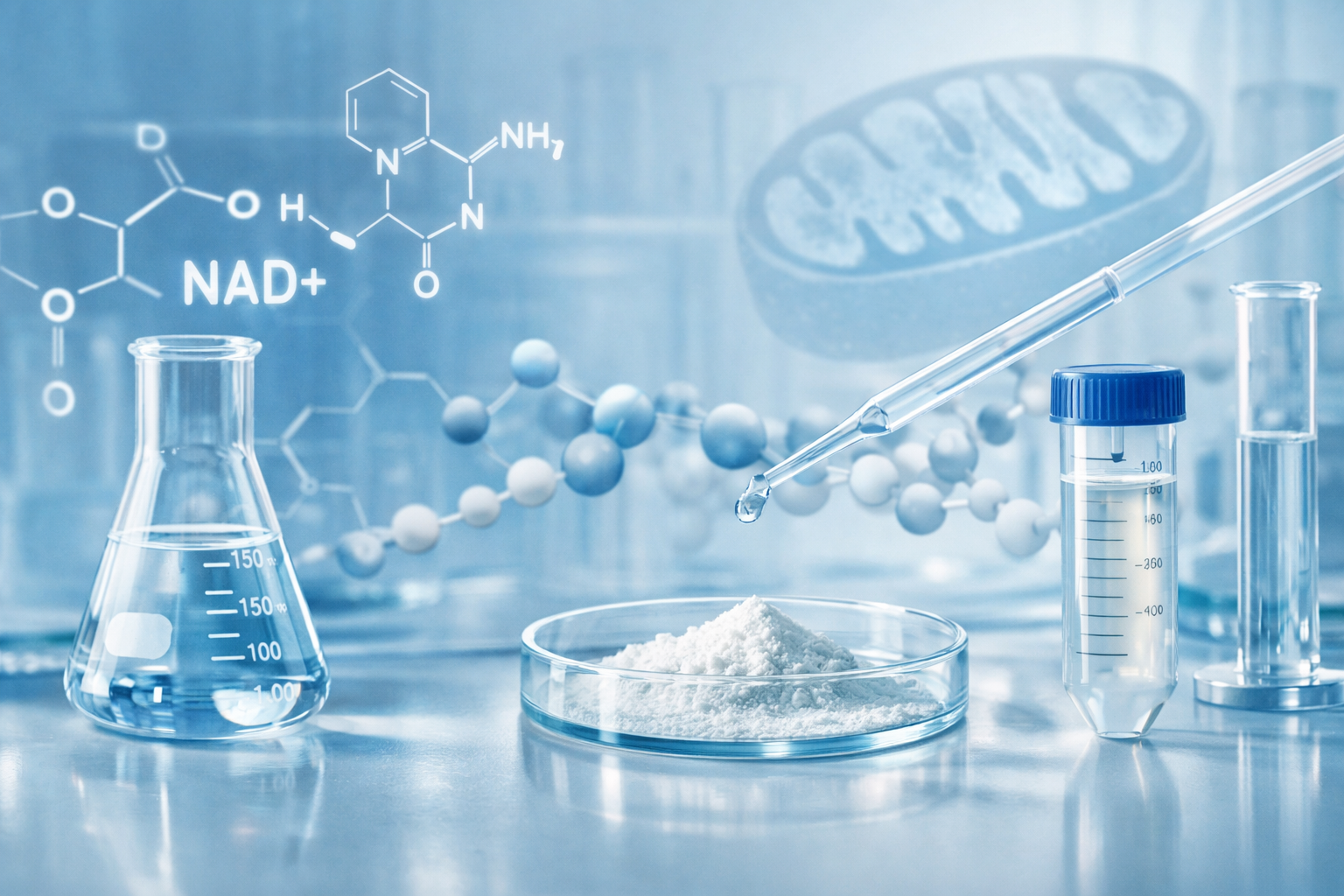
Many labs model cellular energy pathways with tight experimental controls. A NAD+ research compound often sits at the center of that work. Researchers track redox balance, cofactor turnover, and enzyme activity in vitro. Small preparation differences can shift signals and blur conclusions.
Amino inputs also shape baseline metabolism in most models. That is why many teams use a defined Amino Blend during testing. A consistent blend reduces variability across batches and timepoints. It also supports cleaner comparisons between experimental arms.
When labs plan NAD-centered experiments, they often pair inputs thoughtfully. In that context, NAD+ becomes part of a controlled toolkit. The same toolkit may include carnitine inputs and measured amino profiles. This approach can improve interpretability and repeatability.
This article focuses on lab workflows and formulation logic. It discusses a NAD+ research compound alongside modern amino mixtures. All information is for laboratory and research use only. Nothing here supports human use or clinical decisions.
What a NAD+ research compound represents in laboratory work
Working definition in research settings
The phrase NAD+ research compound usually describes a purified material used for experiments. Researchers use it to explore NAD-linked enzyme families and redox behavior. They also use it to standardize assays across instruments and operators. This consistency supports stronger comparisons between results.
Why researchers keep returning to NAD-linked chemistry
NAD participates in electron transfer reactions across many systems. That makes a NAD+ research compound useful for studying redox shifts. It also helps researchers model cofactor-driven kinetics in controlled buffers. Those models often guide how later experiments get designed.
Core properties researchers evaluate
- Identity: confirm the material matches the intended specification.
- Purity: control impurity signals that can distort assay readouts.
- Stability: prevent degradation during storage and repeated handling.
- Solubility: choose buffers that support full dissolution and compatibility.
Handling choices can change outcomes in subtle ways. A NAD+ research compound can degrade faster under heat and light. Teams often aliquot stock solutions to reduce repeated freeze-thaw cycles. They also record preparation steps for stronger traceability.
Why modern Amino Blend design matters for NAD-focused studies
Amino inputs can reshape baseline conditions
Amino acids act as substrates and signaling inputs in many models. Their levels can shift metabolic activity within minutes. That shift can mask the signal from a NAD+ research compound. A defined Amino Blend helps keep conditions consistent.
Benefits of a defined blend for repeatable experiments
A consistent Amino Blend reduces batch drift between media preparations. It supports clearer interpretation when cofactors change during experiments. It also improves reproducibility across different technicians. These gains save time during troubleshooting and replication.
Common reasons labs use an Amino Blend
- To keep amino availability consistent across replicates and timepoints.
- To reduce variability from complex or poorly characterized media ingredients.
- To tune nitrogen balance for a defined experimental objective.
- To support controlled stress or recovery paradigms in vitro.
Blend composition can also affect osmolarity and pH behavior. Those shifts can change enzyme kinetics and transport behavior. That matters when a NAD+ research compound drives the primary readout. Good blend design treats these variables as first-class controls.
Understanding the role of NAD+/Carnitine formulation logic
Why researchers evaluate carnitine alongside NAD pathways
Carnitine often appears in mitochondrial and substrate-use experiments. Researchers associate it with fatty acid transport steps in cellular systems. Substrate selection can influence redox pressure and cofactor balance. That makes paired evaluation useful in many lab models.
What “paired inputs” can reveal in controlled designs
Researchers track how substrate handling influences redox markers over time. They also compare activity changes in NAD-dependent enzyme systems. In these setups, a NAD+ research compound provides a controlled input. Carnitine can provide a second, testable variable.
Typical measurements in NAD and carnitine research workflows
- NAD-linked enzyme activity under defined buffer, temperature, and timing.
- Redox markers that reflect shifts in metabolic balance across conditions.
- Mitochondrial readouts in nutrient-defined cellular models.
- Time-course responses after changes to nutrient and cofactor inputs.
These studies still depend on tight preparation standards. A NAD+ research compound should remain stable throughout the run. Researchers also keep blend inputs consistent across plates and days. This discipline improves signal quality and reduces noise.
Practical, actionable steps for building a reproducible formulation workflow
Step 1: define the experimental objective and success metric
Start with a single primary question and a clear readout. Decide what the NAD+ research compound should change in your model. Then define acceptable variance for controls and replicates. This planning prevents unfocused formulation changes later.
Step 2: choose buffers and targets before mixing
Select buffer systems that match your assay’s operating range. Set pH targets and temperature conditions in advance. Confirm that each component stays soluble at working concentrations. These checks protect your NAD+ research compound signal.
Step 3: standardize stock preparation and documentation
- Prepare labeled stock solutions with concentration and date information.
- Use the same mixing order across batches and across operators.
- Record solvent type, pH adjustments, and filtration steps.
- Store aliquots to reduce repeated handling and degradation.
Step 4: run a pilot series and lock the protocol
Use a small pilot to confirm expected behavior before scaling. Track control stability and check for drift across timepoints. If drift appears, adjust one variable at a time. This approach protects conclusions tied to a NAD+ research compound.
Step 5: integrate the blend concept at the right stage
Add the amino mixture after you confirm base buffer compatibility. Keep amino inputs consistent across all experimental arms. Then introduce paired variables according to your study plan. For some designs, that includes a NAD+/Carnitine Based Amino Blend concept for controlled comparisons.
Compatibility checks that protect NAD and Amino Blend data
Key compatibility questions to answer early
- pH targeting: keep the blend inside your assay’s validated range.
- Order of mixing: dissolve one component fully before adding another.
- Water quality: impurities can alter stability and assay behavior.
- Filtration: match filter materials to your chemistry and workflow.
Some amino profiles can shift ionic strength in measurable ways. That shift can change enzyme activity and transport behavior. It can also change how a NAD+ research compound behaves in solution. Teams should test compatibility before full-scale runs.
Quality controls that strengthen NAD-centered experiments
Batch discipline reduces false conclusions
A NAD+ research compound only helps when documentation stays complete. Track lot identifiers and verify key specifications on receipt. Confirm storage conditions and keep a clear chain of custody. This structure improves confidence in downstream results.
Simple verification steps you can apply today
- Review lot documentation and verify consistency across planned runs.
- Run a short stability check after reconstitution at working conditions.
- Track solution appearance and note any time-dependent changes.
- Create a shared prep checklist for every operator on the team.
These controls reduce wasted plates and repeated runs. They also help isolate whether drift came from prep or biology. That clarity matters when measuring a NAD+ research compound effect. Better controls often yield faster progress.
Troubleshooting signals in NAD and Amino Blend workflows
Common issues and practical fixes
Signal drift often starts with small preparation inconsistencies. Check temperature exposure and light exposure during prep. Verify pH after all components dissolve fully. These steps protect your NAD+ research compound baseline.
- Unexpected variability: tighten timing and mixing order across replicates.
- Solubility problems: adjust buffer choice within validated assay ranges.
- Plate edge effects: standardize incubation and minimize evaporation.
- Baseline shifts: confirm Amino Blend concentration and osmolarity.
Change only one variable per iteration. Keep a short log of what changed and why. This method speeds root-cause identification. It also clarifies the true impact of a NAD+ research compound.
Safety and scope: keep work inside qualified research settings
Use appropriate laboratory controls, PPE, and institutional procedures. Store materials according to documented guidance and local requirements. Keep records for preparation, disposal, and incident response. Limit use to qualified research environments only.
This article discusses formulation concepts for research workflows. It does not offer medical guidance or health outcomes. It does not support human consumption or in vivo use. Always follow applicable regulations and institutional policies.
Conclusion: better structure, better signals, better decisions
A NAD+ research compound can support high-quality redox and cofactor experiments. Modern blend design can reduce noise and improve interpretability. A defined Amino Blend strengthens control over baseline metabolism. Paired inputs can become more meaningful with disciplined preparation.
Use structured steps, consistent documentation, and compatibility testing. These habits protect your data and reduce wasted iterations. For additional general reading, visit Healthke resources. Keep all work within qualified laboratory and research contexts.