 Home
Home

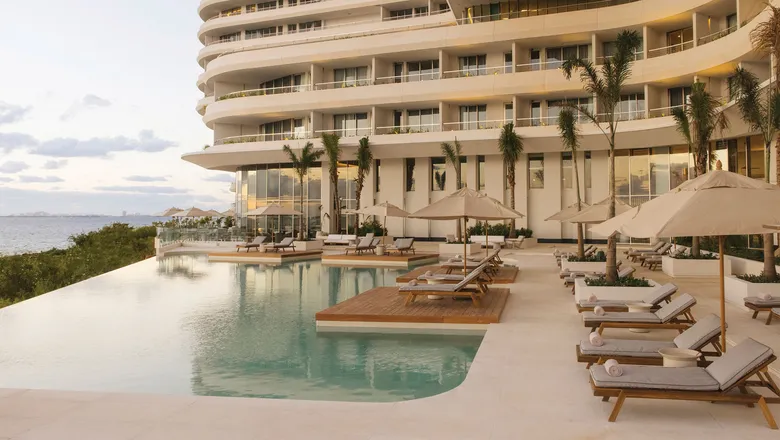
For decades, the concept of “wellness” in hospitality was largely confined to the basement level. It meant a massage table, a steam room, and perhaps a cucumber-infused water station. It was an amenity—an escape from the stresses of travel. But as the global wellness economy surges past $6.8 trillion, the industry is undergoing a profound structural shift. Wellness is no longer an escape from the hotel experience; it is the hotel experience.
The modern hotel is transforming into a longevity laboratory, where every touchpoint—from the air quality to the culinary offerings—is engineered to support the guest’s biological health.
Table of Contents
The Venue as the Primary Healer
This transformation is being driven by the venues themselves. As Avivah Wittenberg-Cox recently noted in her exploration of the longevity economy, the narrative is shifting away from elite, extreme interventions toward “practical systems for the many” [1]. The real laboratory for longevity, she argues, is not a one-week mountain retreat, but the ordinary spaces we move through the rest of the year—including business travel.
We are seeing this play out at scale. Novotel, a global mid-market brand, has boldly repositioned itself around a concept called “Longevity, Every Day.” Instead of treating wellbeing as an occasional indulgence, they have built their entire brand promise around four foundational pillars: Sleep, Eat, Move, and Meet [1].
This is not about adding a new spa menu; it is about fundamentally altering the environment. Properties are investing in circadian lighting to regulate melatonin production, advanced air purification systems, and biophilic design principles that lower cortisol levels [2]. The hotel itself has become the primary intervention.
Institutionalizing Wellness: The EHL Approach
This shift from amenity to core strategy is so significant that it is changing how the next generation of hoteliers is educated. At the prestigious EHL Hospitality Business School in Switzerland, wellness is no longer just a trend to be observed; it is a hard science to be managed.
EHL’s Spa & Wellness Management specialization—part of their Swiss Professional Degree—reflects this new reality. Students are not just learning about massage techniques; they are studying “Spa architecture, design and equipment,” exploring how to stimulate the five physical senses to tell a coherent story, and mastering the financial modeling required to turn wellness into a core revenue driver [3].
The curriculum explicitly recognizes that modern wellness hospitality requires an “engineering” mindset. As Ulrike Kuhnhenn, Associate Dean at EHL Campus Passugg, notes, guests today have very specific, science-backed expectations. The modern hotelier must “combine best practices of medicine and hospitality to offer guests a high-quality experience in all respects” [3].
The Ecosystem of Curated Partnerships
As hotels evolve into these sophisticated longevity environments, they are realizing that they cannot build the entire ecosystem alone. The smartest properties are acting as orchestrators, curating best-in-class partners to complete their wellness vision.
This is where specialized, science-backed brands are finding their most powerful platform. Rather than driving the entire wellness narrative, these brands act as crucial participants, offering unique value propositions that enhance the hotel’s overarching strategy.
We see this in the sleep technology integrated into rooms at the Malibu Beach Inn, or the diagnostic clinics partnering with legacy properties [2]. We also see it in the realm of cellular nutrition.
A prime example is the recent introduction of Paremina, a longevity nutraceutical brand from Switzerland by the prestigious Swiss Deluxe Hotels network—representing 43 of Switzerland’s most exclusive five-star properties in Switzerland and the world.
The premium members from Swiss Deluxe Hotels has already established the environments, the therapies, and the service standards required for elite wellness. By introducing premium longevtiy wellness brands such as Paremina into its supplier system, they are adding a highly specialized internal component to their ecosystem, leaving minibars and menus to be re-imagined from serving only snacks/alchohols to longevity-based health food and supplements. Paremina’s hero product, AGELESS CELL, amis to provide holistic cellular health solution by utilizing clinical-proven Alpine botanicals.
The Future of Travel
The hospitality industry has realized that the most valuable thing they can offer a guest is not just a good night’s sleep, but a longer, healthier life. By redesigning their environments, educating their leaders in the science of wellbeing, and collaborating with pioneering brands like Paremina, the world’s top hotels are proving that true luxury is biological resilience.
The hotel is no longer just a place to stay. It is a place to thrive.
References
[1] Wittenberg-Cox, A. (2026). Democratising Longevity. Elderberries / 4-Quarter Lives. https://elderberries.substack.com/p/democratising-longevity [2] Saul, L. (2023/2025). Hospitality Trends: Wellness and wellbeing for a thriving life. EHL Insights. https://hospitalityinsights.ehl.edu/hospitality-trends-wellness-and-wellbeing [3] EHL Hospitality Business School. (2026). Spa Management Major | Swiss Professional Degree. https://passugg.ehl.edu/en/study/hf-diploma/spa-management-major