
 Home
Home

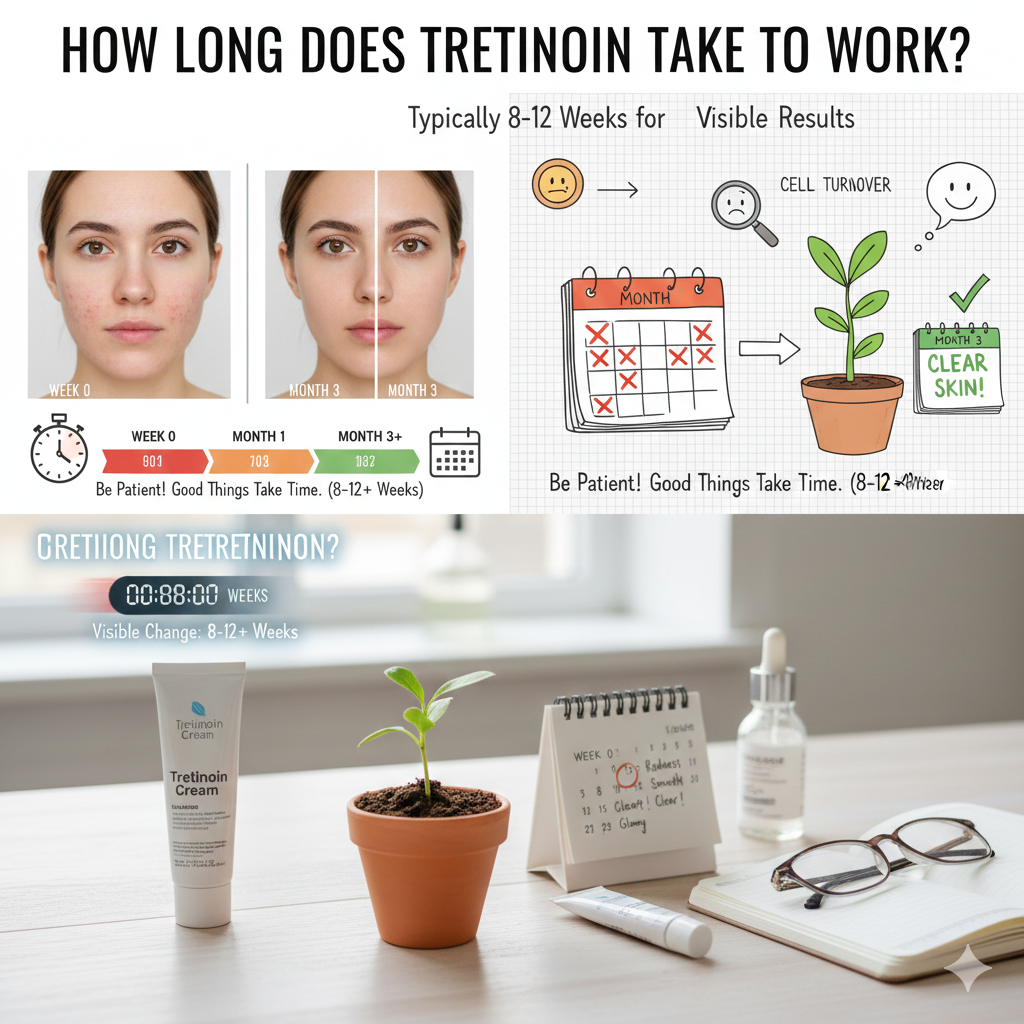
When you are researching the range of skincare products, you have probably encountered tretinoin, a widely-known product that boasts of fighting acne, wrinkles, and discolouration of the skin. There is always one question in the mind of the new users, how long does tretinoin take to work? It is a legitimate worry particularly with regard to the time it takes to realize the tangible benefits. It is time to dive deep into this question, unravel the timeline, and come to expectations.
The Reality of Tretinoin: Patience Is a Virtue
Tretinoin is an efficient retinoid, which is a derivative of vitamin A, hastens the process of cell turnover, enhances the synthesis of collagen and speed up skin renewal. It is proven to be effective, however, it takes time, unlike other skincare products that claim to perform miracles overnight.
What is the time of action of tretinoin, then? The real answer is: it depends. There are many aspects which influence the course and being aware of them will make certain that you will be motivated during the first few weeks of taking the medication.
The First Weeks: A Phase of Adjustment
As soon as you start using tretinoin, they will start transitioning in the skin per se. Early phases are however normally characterized with skin irritation. Dryness, peeling of skin, erythema or slight discomfort is to be anticipated- these are the typical adverse effects as your skin gets used to the retinoid.
In this stage, lasts about 2 to 4 weeks, the improvements are normally insignificant. Other users question whether the drug is actually taking effect and you have nothing to worry about as this is only the tip of the iceberg. The skin is acclimatizing, and there is an acceleration of cell turnover under the skin.
The One-Month Mark: Subtle Changes Emerge
Around 4 weeks into treatment, some individuals may notice small signs of progress. For acne sufferers, breakouts might decrease in frequency or severity. For those targeting dark spots or fine lines, faint improvements—like smoother texture or slight fading—may start to appear.
However, these early results are often modest. The real transformation takes time, and patience remains essential.
Three to Six Months: The Turning Point
This is the critical window where most users begin to see significant results. Between 3 to 6 months, how long does tretinoin take to work becomes clearer as the cumulative effects become evident.
- Acne: Many people experience clearer skin, fewer breakouts, and reduced inflammation.
- Wrinkles and Fine Lines: Skin looks firmer, with improved texture and elasticity.
- Hyperpigmentation: Dark spots and uneven skin tone tend to fade noticeably.
It’s worth noting that consistent use is key during this phase. Missing applications or inconsistent routines can delay progress.
Beyond Six Months: Achieving Optimal Results
For those committed to their tretinoin regimen, the benefits continue to improve over time. After six months to a year, many users attain their desired outcomes, such as smooth, youthful, and radiant skin. Collagen production peaks, scars fade, and sun damage diminishes.
However, it’s essential to maintain ongoing use to preserve these results and prevent new skin issues from forming.
Factors That Affect How Quickly Tretinoin Works
While the general timeline provides guidance, individual experiences vary. Several factors influence **how long does tretinoin take to work**:
- Skin Type: Oily and acne-prone skin often responds faster in terms of breakouts clearing.
- Concentration: Higher strengths like 0.05% or 0.1% may deliver quicker results but can increase irritation.
- Application Routine: Regular, consistent use accelerates results. Sporadic application prolongs the process.
- Age: Younger skin tends to regenerate faster due to higher cell turnover.
- Other Skincare Practices: Combining tretinoin with moisturizers, sunscreens, and gentle cleansers can enhance and protect results.
Managing Expectations and Patience
It is important to know the duration of action of tretinoin in order to manage expectations. It is natural to get depressed when the outcomes do not come as quickly as possible. It is important to keep in mind that tretinoin is an investment in the health of your skin in the long term.
Avoid Overusing: Applying more than prescribed won’t speed up results and may cause irritation.
- Stay Consistent: Follow your dermatologist’s instructions diligently.
- Protect Your Skin: Use sunscreen daily; tretinoin increases photosensitivity.
- Be Patient: True skin transformation takes time. Give your skin the months it needs.
Tips to Speed Up Your Results
While you can’t rush the biological processes, some tips can help make your tretinoin journey smoother:
- Start Low, Go Slow: Begin with lower concentrations or less frequent applications to reduce side effects.
- Hydrate and Moisturize: Keep your skin barrier healthy to minimize dryness.
- Avoid Harsh Products: Stay away from abrasive scrubs or astringents that can irritate.
- Visit Your Dermatologist: Regular check-ins can help tweak your routine for optimal results.
When to See a Dermatologist
If after 6 to 12 months of consistent use, you see little improvement, or if side effects become severe, consult your dermatologist. They can assess whether your treatment plan needs adjustment or if alternative therapies might be more suitable.
Final Thoughts: Patience and Persistence Pay Off
In conclusion, how long does tretinoin take to work varies among individuals. Typically, noticeable results are seen between 3 to 6 months, with maximum benefits emerging after a year of dedicated use. Remember, the journey with tretinoin involves patience, consistency, and proper skincare practices.
If you’re just starting out, keep in mind that skin renewal is a gradual process, and your efforts will pay off over time. Embrace the journey, stay committed, and trust in the power of tretinoin to transform your skin into a healthier, more radiant version of itself.