 Home
Home

What full mouth dental implants really cost
Sticker shock hits fast.You search the cost of full mouth dental implants, and the numbers jump all over the place.
One clinic quotes the price of a car. Another hints at a small house.
That confusion causes stress.Most people want a straight answer.
They want to know what they’ll actually pay, and why the price swings so much.
We’ll break it down. Plain language. No fluff. Global costs, US costs, and what changes the final bill.
Think of this as a price map, not a sales pitch.
What are full mouth dental implants?
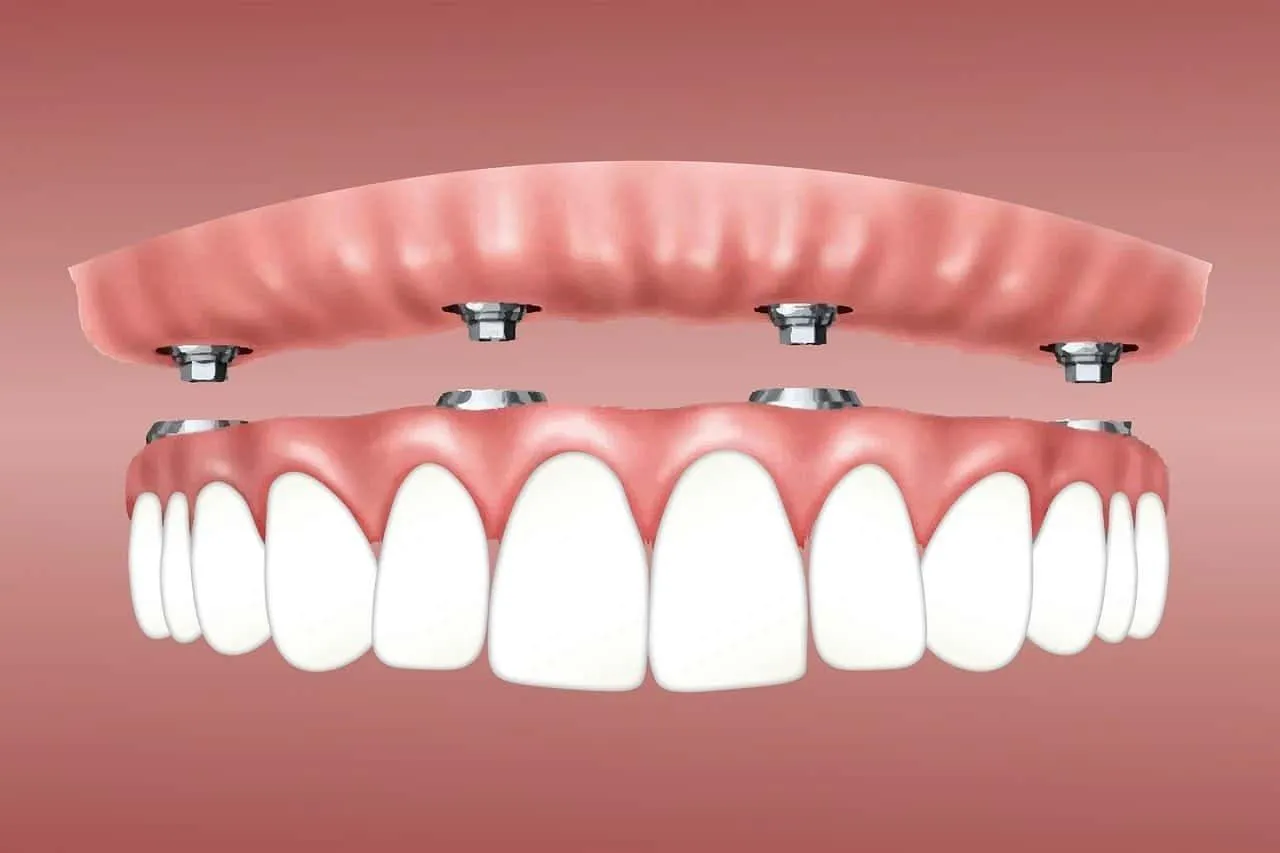
Full mouth dental implants replace all teeth on the upper jaw, lower jaw, or both.
Instead of one implant per tooth, dentists use fewer implants to hold a full set of fixed teeth.
It’s like replacing a shaky fence with solid posts and one strong rail.
Most treatments use 4 to 8 implants per arch.
A custom bridge or denture locks onto them.
The result looks and works like real teeth.
How much do full mouth dental implants cost?
The cost of full mouth dental implants ranges from $20,000 to $60,000 per arch worldwide, and $30,000 to $90,000 per arch in the United States. The final price depends on the implant method, materials used, lab fees, and whether extra work like bone grafts or extractions is needed.
That’s the short answer.
Now let’s slow it down and explain the spread.
Average cost by region
Prices change based on geography.
Labor, lab fees, and regulation all matter.
Below is what patients typically see.
United States
Full mouth implants in the US cost the most.
Per arch pricing often falls between $30,000 and $90,000.
Both arches can push totals past $150,000.
Private clinics set their own fees.
Insurance rarely covers much.
Payment plans help, but the base cost stays high.
Suggested data placement:
A table showing average per-arch and full-mouth prices by US region, with notes on urban vs rural clinics.
Europe
Western Europe sits below US pricing.
Countries like Germany, France, and the UK often charge $20,000 to $45,000 per arch.
Eastern Europe costs less.
Hungary and Poland attract dental tourists.
Comparable work may run $12,000 to $25,000 per arch.
Travel adds cost, but savings remain.
Mexico
Mexico remains a top choice.
Full mouth dental implants often cost $10,000 to $25,000 per arch.
Border cities price lower due to volume.
Many dentists train in the US.
Clinics cater to English speakers.
Aftercare planning matters here.
Suggested image placement:
A map highlighting popular dental tourism destinations with average implant costs.
Turkey
Turkey offers lower prices with modern clinics.
Per arch costs often range from $8,000 to $20,000.
Istanbul leads the market.
Patients fly in from Europe and the Middle East.
Packages sometimes include hotels.
Always review implant brands used.
Asia
Thailand and India also draw patients.
Prices range from $7,000 to $20,000 per arch.
Costs drop further outside major cities.
Travel time increases.
Follow-up visits need planning.
Savings appeal to long-term travelers.
Why costs vary so much
Prices don’t swing at random.
Several factors stack together.
Change one, and the bill shifts.
The implant technique used
Not all full mouth implants work the same way.
The method changes surgery time and materials.
That changes cost.
All-on-4
All-on-4 uses four implants per arch.
The implants sit at angles for strength.
It reduces the need for bone grafts.
Costs usually sit on the lower end.
It’s efficient.
It’s widely offered.
All-on-6 or All-on-8
More implants mean more stability.
Six or eight implants spread pressure better.
This works well for heavy bite forces.
Costs rise with each added implant.
Surgery time increases.
Lab work becomes more complex.
Individual implants for each tooth
This method uses one implant per tooth.
It’s rare for full mouths now.
Costs skyrocket fast.
Expect the highest pricing here.
Most clinics steer away from it.
Maintenance also costs more.
Materials used for implants
Materials matter more than people expect.
They affect strength, feel, and lifespan.
They also affect price.
Titanium implants
Titanium remains the standard.
It’s strong and well-studied.
Most clinics use it.
Costs stay moderate.
Replacement parts stay available.
Long-term results remain consistent.
Zirconia implants
Zirconia implants are metal-free.
Some patients prefer them for allergies.
They cost more.
Not all dentists offer them.
Fewer long-term studies exist.
Repairs can cost more later.
Teeth material for the bridge
The visible teeth drive price too.
- Acrylic costs less.
- Zirconia costs more.
- Porcelain sits in the middle.
Acrylic wears faster.
Zirconia lasts longer and looks more natural.
That choice alone can change cost by $10,000 or more.
Suggested infographic:
A side-by-side comparison of bridge materials showing price, lifespan, and pros and cons.
Bone grafting and extra procedures
Some mouths need prep work.
That adds cost before implants even start.
It catches many patients off guard.
Bone grafting
Missing teeth lead to bone loss.
Implants need solid bone to hold.
Grafts rebuild that base.
Costs range from $1,000 to $5,000 per area.
Large grafts cost more.
Healing time adds months.
Sinus lifts
Upper jaw implants sometimes need sinus lifts.
This creates room for implants.
It adds surgical steps.
Costs often fall between $2,000 and $4,000.
Not everyone needs it.
Scans decide that.
Extractions
Old teeth must come out first.
Simple extractions cost less.
Surgical ones cost more.
Expect $100 to $500 per tooth.
Full mouths add up fast.
Some clinics bundle this into implant pricing.
Lab fees and customization
Your new teeth aren’t off-the-shelf.
Dental labs custom-make them.
That work costs money.
High-end labs charge more.
Digital design adds accuracy.
Hand-finished work adds time.
US labs cost more than overseas labs.
That difference shows in pricing.
It also affects repair speed.
Dentist experience and clinic overhead
Skill isn’t free.
Neither is rent.
Both shape the final bill.
Experienced implant dentists charge more.
They’ve seen complications before.
They plan better from the start.
Large cities cost more.
Smaller towns often charge less.
That gap can reach tens of thousands.
What’s included in the quoted price?
Quotes often confuse people.
Some show one number.
Others hide extras.
Always check what’s included.
Items often included
- Consultations
- 3D scans
- Surgery
- Temporary teeth
- Final bridge
These form the base package.
Items often excluded
- Bone grafts
- Extractions
- Sedation
- Follow-up visits
- Repairs after a set period
These extras raise real cost fast.
Suggested data placement:
A checklist graphic showing “included vs not included” items in implant quotes.
Full mouth dental implants vs dentures
Cost comparisons matter.
Dentures cost less upfront.
Implants cost more at first.
Dentures often run $1,000 to $5,000 per arch.
They slip and wear out.
They need replacement.
Implants cost more now.
They last longer.
They protect jawbone.
It’s like renting versus buying.
Short-term savings differ from long-term value.
Long-term costs to expect
Implants aren’t free forever.
Maintenance still matters.
Planning helps avoid surprises.
Cleaning and checkups
Regular dental visits stay necessary.
Professional cleanings cost $150 to $300.
Implant checks protect your investment.
Repairs and replacements
Acrylic bridges wear down.
They may need replacement after 5 to 10 years.
Zirconia lasts longer.
Screw replacements cost little.
Bridge replacements cost more.
Plan ahead.
Does insurance help?
Most insurance plans limit implant coverage.
They may cover extractions.
They rarely cover full arches.
Annual caps stay low.
$1,000 to $2,000 is common.
That barely dents the total.
Some plans cover parts of treatment.
Always check fine print.
Never assume coverage.
Financing options
Many patients don’t pay cash.
Clinics know this.
Options exist.
In-house payment plans
Some clinics offer monthly plans.
Interest varies.
Terms differ.
Ask about penalties.
Ask about early payoff.
Read carefully.
Medical credit companies
Third-party lenders step in.
They offer longer terms.
Rates depend on credit.
Monthly payments help budgeting.
Total paid increases.
Know that trade-off.
Is traveling for implants worth it?
Dental tourism saves money.
It also adds risk.
Balance both sides.
Savings often reach 50 percent or more.
Travel costs eat part of that.
Follow-up care matters most.
Choose clinics with clear records.
Ask about warranties.
Plan return visits if needed.
Red flags to watch for
Low prices attract attention.
Some deals cut corners.
Spot warning signs early.
- No implant brand listed
- No written treatment plan
- Pushy sales tactics
- No aftercare policy
If it feels rushed, pause.
Your mouth deserves patience.
How to estimate your own cost
Start with basics.
Jaw count matters.
Material choice matters.
Ask clinics for itemized quotes.
Compare apples to apples.
Look past the headline number.
Expect adjustments after scans.
That’s normal.
Clear communication helps.
Final thoughts on pricing clarity
The cost of full mouth dental implants feels heavy at first glance.
That’s normal.
It’s one of the largest dental expenses people face.
Clear numbers reduce stress.
Knowing what drives cost restores control.
Planning turns shock into steps.