 Home
Home

Last winter, a friend of mine tried to book a clinic visit for a simple throat infection. The earliest slot was two days later. By then, the pain had worsened, and she ended up in urgent care. The issue was minor. The delay was the real problem.
Stories like this are common. People are not avoiding healthcare because they do not care. They avoid it because the process feels exhausting.
That is why services like a home visit doctor, a reliable doctor on call, and at-home STD testing are becoming part of everyday life. They remove the small obstacles that often stop people from acting early. More importantly, they make care easier to access when it is actually needed.
Healthcare providers are part of this shift. Instead of asking patients to adjust their schedules around clinics, they bring care directly to the patient. It sounds simple. But the impact is significant.
Table of Contents
When Getting Care Feels Harder Than Being Sick
Most people have experienced this:
- You wake up unwell.
- You search for available appointments.
- The clinic is fully booked.
- The waiting room is crowded.
- You lose half your day for a 15-minute consultation.
It often becomes more time-consuming than expected. Managing ill children in a public place becomes a challenge for parents. For elderly patients, it means arranging transport. And it often means unpaid leave for working adults.
According to global healthcare surveys, convenience now ranks among the top reasons patients switch providers. Access matters as much as treatment quality.
When care is hard to access, people delay it. Delays often make minor conditions worse.
Doctor at Home: Practical, Not Luxurious
A few years back, it was uncommon for many individuals to call a doctor to their home. Today, it is simply practical.
If a child has a fever or an adult has severe body aches, traveling across town is the last thing anyone wants. A home visit solves that problem.
A typical doctor at home visit may include:
- Full symptom assessment
- Vital sign monitoring
- Physical examination
- Prescriptions
- Advice on recovery and follow-up
At home, patients don’t have to wait in long lines or sit among other sick people.
For elderly patients, this model works especially well. A home visit doctor can observe the following:
- Mobility issues,
- Medication storage, or
- Fall risks inside the home
That extra detail often improves treatment decisions.
Convenience here is not about comfort alone. It is about removing friction so that the treatment can start sooner.
Doctor on Call: Support When You Need It Most
Some health issues cannot wait. A high fever at night or sudden vomiting after dinner creates anxiety fast.
This is where a doctor on call becomes valuable.
Instead of guessing whether the issue is serious, patients can request a quick medical evaluation without dealing with traffic chaos, long queues, or waiting at crowded emergency rooms.
For medical queries and concerns, people can also consult a doctor online via teleconsultation. Without any wait or stress, people talk to a specialist.
Common Reasons People Use Doctor on Call Services
- Sudden flu symptoms
- Stomach infections
- Ear pain in children
- Mild asthma attacks
- Skin reactions
Not every case requires an emergency room. In fact, studies show that a significant portion of ER visits are for non-life-threatening conditions.
Timely home-based care reduces unnecessary hospital visits. It also gives families peace of mind and saves time that would otherwise be spent waiting.
STD Test at Home: Removing the Awkward Part
Sexual health is important. Yet many people postpone testing. There are many reasons behind this. Some of the most common reasons are as follows:
- Embarrassment
- Fear of judgment
- Privacy concerns
- Long waiting times
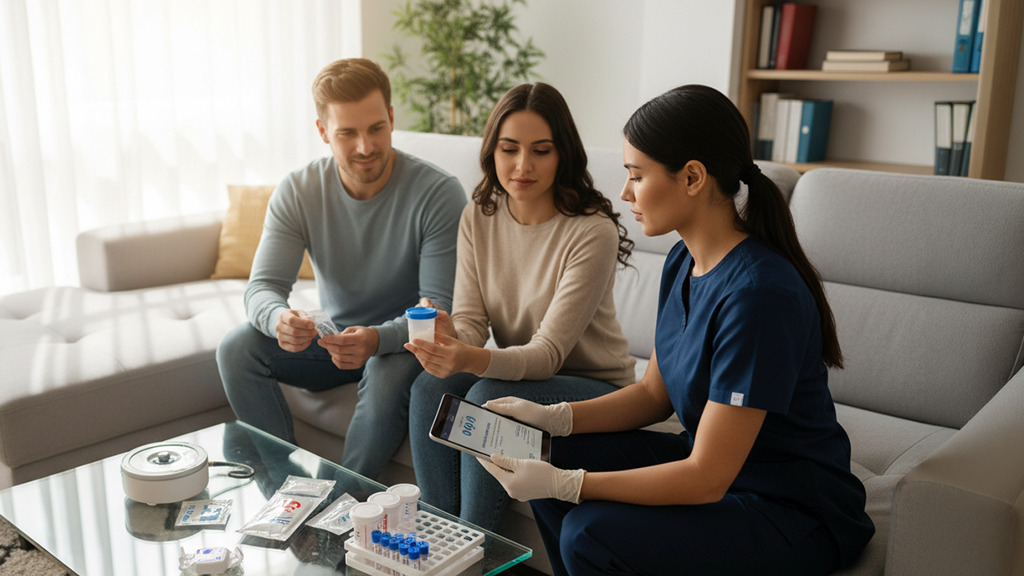
An STD test at home removes most of these barriers and makes screening more approachable.
Why This Matters
Health organizations report millions of new sexually transmitted infections globally each year. Many of the cases go undiagnosed because people hesitate to get tested or delay appointments.
At-home testing makes the process simpler:
- Samples are collected privately
- Instructions are clear
- Results are shared securely
- Follow-up consultation is available if required
It also allows individuals to test at a time that suits them.
This encourages regular screening, especially for the following:
- Sexually active adults,
- Individuals with new partners, or
- Those who simply want reassurance
Prevention improves when the process of testing becomes convenient.
Home Care in Everyday Situations – When is it Efficient?
In order to understand its value, a few real-life examples are mentioned below:
Busy Work Schedule
A professional with a tight calendar develops a high fever. Instead of canceling meetings for a clinic visit, a doctor on call provides treatment quickly at home, hotel, or office.
Elderly Family Member
An older parent feels dizzy in the evening. Instead of making the unnecessary trip to the hospital, a doctor at home evaluates the condition and provides advice.
Sensitive Health Question
Someone wants routine sexual health screening but values privacy. An STD test at home offers discretion without avoiding responsibility.
These examples are simple. That is the point. Healthcare should work smoothly in ordinary situations.
Does Convenience Affect Quality?
It is a fair question that usually comes to mind.
Reliable providers maintain the following standards:
- Licensed and experienced doctors
- Proper medical equipment
- Clear documentation
- Secure handling of patient information
- Referral to hospital when needed
Home-based care is not meant for heart attacks or severe trauma. Emergency services at hospitals remain essential when it comes to life-threatening cases.
However, services like an on-call doctor and STD test at home are safe and effective for:
- Routine consultations,
- Everyday medical requirements, and
- Preventive screening
Technology Behind the Scenes
Much of the shift in healthcare is supported by digital systems.
Patients can do the following:
- Online booking of appointments
- Receiving digital prescriptions
- Discreetly accessing lab reports
- Easy scheduling of follow-ups
Patients find the overall process straightforward because there is less paperwork and fewer delays.
Healthcare providers like MyDoctor Healthcare blend digital booking with in-person medical visits, making the experience smoother without overcomplicating it.
A Quiet Shift in Expectations
Ten years ago, many people accepted long waits as normal. Today, expectations are different.
We order groceries from home. We attend meetings online. We manage banking through apps. Healthcare is naturally moving in the same direction.
Doctor at home services are no longer unusual. A doctor on call is no longer a last resort. Even at-home testing has become routine.
The goal is not to replace hospitals. It is to handle common health needs in a way that stays respectful towards the time, privacy, and comfort of the patients.
Taking Healthcare into Your Own Hands
Getting care doesn’t have to be complicated. With a doctor at home, you can get checked without leaving your space. An on-call doctor is there when something sudden comes up. And an STD test at home lets you handle sensitive health matters privately.
When services are easy to access, it is more likely for the patients to act early. And in healthcare, acting early often makes all the difference.