
 Home
Home

If you have polycystic ovary syndrome (PCOS), you may have heard that your condition has a new name: PMOS, short for polyendocrine metabolic ovarian syndrome. The rename was officially adopted in May 2026 after a 14-year global consensus effort — and it is more than a cosmetic change. Here is what happened, why it matters, and what stays the same.
Table of Contents
What happened: PCOS renamed to PMOS
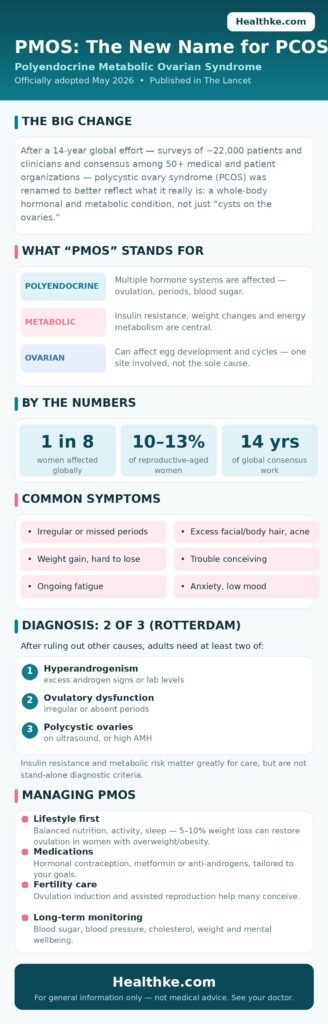
In May 2026, an international consensus published in The Lancet formally renamed polycystic ovary syndrome (PCOS) to polyendocrine metabolic ovarian syndrome (PMOS). The decision followed more than a decade of work involving medical experts, researchers, patient advocates, and surveys of around 22,000 patients and clinicians across more than 50 medical and patient-advocacy organizations, including the Endocrine Society.
What does PMOS stand for?
Each part of the new name describes the condition more accurately:
- Polyendocrine — multiple hormone systems are affected, including those controlling ovulation, periods, and blood sugar.
- Metabolic — the condition involves insulin resistance, blood-sugar regulation, weight changes, and energy metabolism.
- Ovarian — it can affect egg development, ovulation, and menstrual cycles — but the ovary is now understood as one affected site, not the sole source of the problem.
Why was the name changed?
The old name caused real harm, experts say. The “cysts” in polycystic ovary syndrome are not true cysts at all — they are small, immature follicles visible on ultrasound — and many women with the condition do not have them. Women were told they had PCOS despite scans showing no cysts, while others with the hormonal and metabolic features were missed because they lacked the “telltale” ovarian appearance.
The old name also framed PMOS as a narrow gynecological problem, which shaped how it was researched, funded, and diagnosed. The new name recognizes it as a lifelong, multisystem endocrine-metabolic condition affecting roughly 10–13% of reproductive-aged women worldwide (about 1 in 8), with many cases still undiagnosed.
Does the rename change my diagnosis or treatment?
No — and this is important. The change concerns nomenclature, not diagnostic criteria. Diagnosis is still based on the established Rotterdam approach: after excluding other causes, adults generally need two of three features:
- Clinical or biochemical hyperandrogenism (excess “male-type” hormones — e.g., hirsutism, acne, hair thinning)
- Ovulatory dysfunction (irregular or absent periods)
- Polycystic ovarian morphology on ultrasound, or elevated anti-Müllerian hormone (AMH)
Insulin resistance, excess weight, and metabolic risk are important associated features but are not stand-alone diagnostic criteria. If you were diagnosed with PCOS, you now have PMOS — same condition, more accurate name.
Common symptoms of PMOS
PMOS looks different for everyone, but common features include:
- Irregular, infrequent, or absent periods
- Excess facial or body hair growth (hirsutism), acne, or scalp hair thinning
- Weight gain or difficulty losing weight, especially around the abdomen
- Darkened skin patches (acanthosis nigricans), skin tags
- Difficulty conceiving / infertility
- Fatigue, and in many cases anxiety, depression, or disordered eating
Health risks linked to PMOS
Because PMOS is metabolic as well as reproductive, it carries long-term risks worth taking seriously:
- Type 2 diabetes — insulin resistance is central to PMOS and can progress to prediabetes and diabetes.
- Heart and metabolic disease — higher rates of high blood pressure, abnormal cholesterol, and cardiovascular risk.
- Infertility and pregnancy complications — irregular ovulation is a leading cause of infertility; pregnancy may carry higher risks.
- Mental health — significantly higher rates of anxiety, depression, and eating disorders.
- Endometrial health — prolonged absence of ovulation can thicken the uterine lining over time.

How PMOS is managed
There is no single cure, but PMOS is highly manageable with a plan tailored to your goals (regular cycles, clearer skin, weight management, fertility, or long-term metabolic health):
- Lifestyle first. Balanced nutrition, regular physical activity, good sleep, and stress management improve insulin sensitivity, cycles, and symptoms. Even modest weight loss (5–10%) can restore ovulation in many women with overweight or obesity.
- Medications. Depending on your needs, doctors may prescribe hormonal contraception (to regulate cycles and reduce androgen symptoms), metformin (for insulin resistance), or anti-androgen treatments.
- Fertility care. Ovulation-induction medications and assisted reproduction help many women with PMOS conceive.
- Mental-health support. Given the strong links with anxiety and depression, psychological support should be part of care.
- Long-term monitoring. Regular checks of blood sugar, blood pressure, cholesterol, weight, and mental wellbeing.
The bottom line
PMOS is the same condition millions of women knew as PCOS — but the new name finally describes what it really is: a whole-body hormonal and metabolic condition, not just “cysts on the ovaries.” If you were dismissed, misdiagnosed, or confused by the old name, this change is for you. Talk to your doctor about what PMOS means for your care plan.
FAQs
What is PMOS?
PMOS (polyendocrine metabolic ovarian syndrome) is the new name, adopted in May 2026, for the condition previously called polycystic ovary syndrome (PCOS). It affects hormones, metabolism, periods, skin, fertility, and mental health.
Why was PCOS renamed to PMOS?
Because the old name was misleading: the “cysts” are not true cysts, many patients don’t have them, and the name hid the condition’s metabolic and multisystem nature — contributing to missed diagnoses.
Is PMOS a different disease from PCOS?
No. It is a nomenclature change, not a new disease or new diagnostic criteria. If you had PCOS, you now have PMOS.
How is PMOS diagnosed?
After ruling out other causes, adults need two of three: hyperandrogenism, ovulatory dysfunction (irregular periods), or polycystic-appearing ovaries/elevated AMH.
Can PMOS be cured?
There is no cure, but symptoms and long-term risks can be effectively managed with lifestyle measures, medications, and fertility treatment when needed.
Does PMOS increase diabetes risk?
Yes. Insulin resistance is a core feature of PMOS, raising the risk of prediabetes and type 2 diabetes — which is why metabolic screening is part of good PMOS care.
Medical disclaimer: This article is for general information only and is not medical advice. If you have symptoms or concerns, please consult a qualified healthcare professional.