 Home
Home

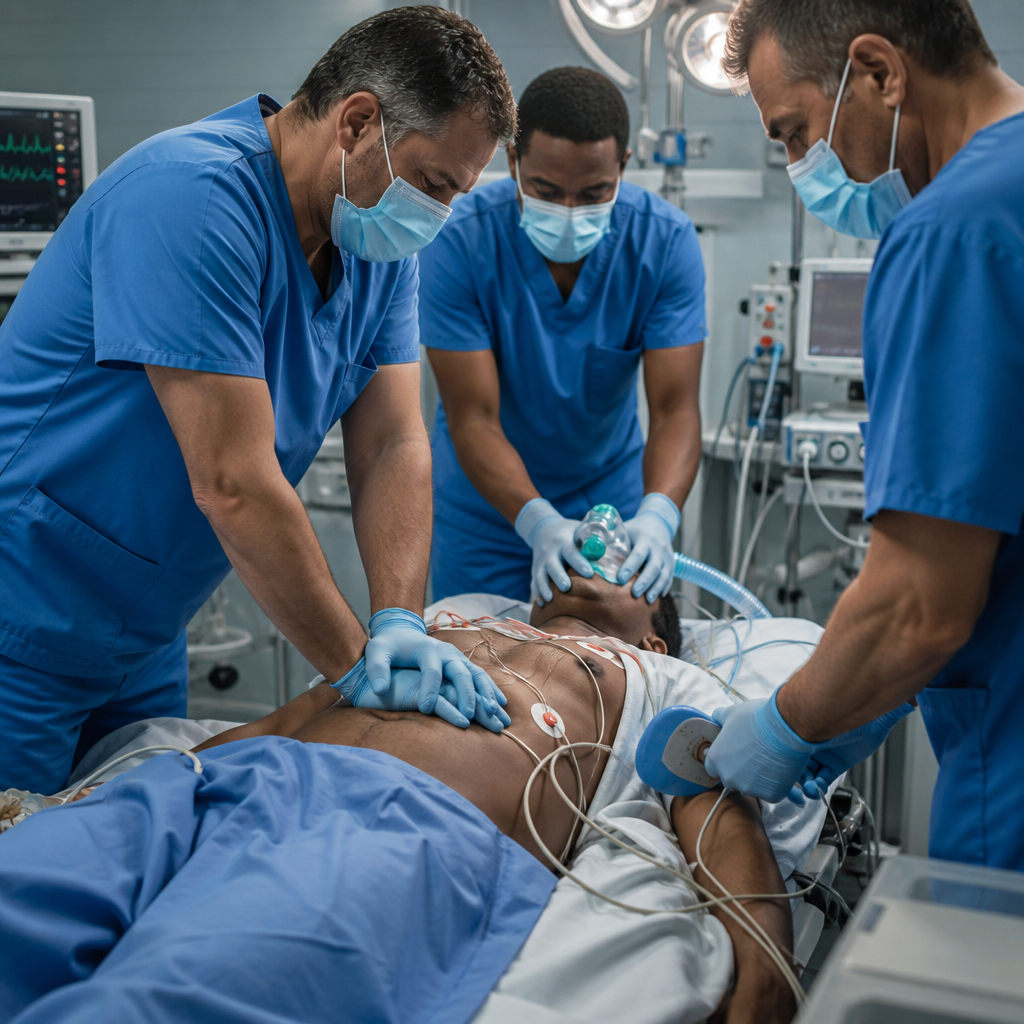
When the heart suddenly stops beating, every second counts. Cardiac arrest is one of the most time-sensitive medical emergencies a person can experience, and what happens in the hospital after initial resuscitation determines long-term survival and quality of life. Understanding the full spectrum of in-hospital treatment — from the moment a patient arrives in the emergency department to the implantation of devices that prevent future episodes — empowers patients, families, and caregivers to make informed decisions during one of the most frightening experiences of their lives.
The First Priority: Restoring Heart Rhythm
The immediate goal when a cardiac arrest patient reaches the hospital is to restore a stable, effective heart rhythm. If bystanders or paramedics have already performed CPR and used an automated external defibrillator (AED), the patient may arrive with a pulse. However, the heart’s electrical system often remains dangerously unstable, requiring continued monitoring and intervention.
Emergency physicians use advanced cardiac life support (ACLS) protocols, which may include intravenous medications such as epinephrine and amiodarone, manual defibrillation, and endotracheal intubation to secure the airway. Once the heart is beating again, the focus shifts to identifying the underlying cause — most commonly a blockage in a coronary artery — and preventing further damage to the heart muscle and brain.
Emergency Coronary Intervention
A significant proportion of cardiac arrests are triggered by acute myocardial infarction, commonly known as a heart attack. In these cases, cardiologists perform emergency percutaneous coronary intervention (PCI), a procedure in which a thin catheter is threaded through the arteries to open the blocked vessel using a balloon and, typically, a stent. Restoring blood flow to the heart muscle as quickly as possible limits permanent damage and dramatically improves survival outcomes. Many hospitals now operate around-the-clock cardiac catheterization laboratories precisely for this reason.
Targeted Temperature Management: Protecting the Brain
Even after the heart is restarted, the brain remains at serious risk. During cardiac arrest, the brain is deprived of oxygen, and paradoxically, the return of blood flow can trigger a cascade of cellular damage known as reperfusion injury. To counteract this, many hospitals employ targeted temperature management (TTM), also called therapeutic hypothermia.
In TTM, the patient’s core body temperature is carefully lowered to between 32°C and 36°C for a period of 24 to 48 hours. This controlled cooling slows the metabolic processes that lead to brain cell death, giving neurons a better chance of recovery. Patients undergoing TTM are sedated and closely monitored in the intensive care unit (ICU). After the cooling phase, the body is gradually rewarmed to normal temperature, and neurological assessments are conducted to evaluate brain function.
ICU Monitoring and Organ Support
The post-cardiac arrest period is medically complex. Patients often experience what clinicians call “post-cardiac arrest syndrome,” a condition involving myocardial dysfunction, systemic inflammation, and potential multi-organ failure. Intensive care teams manage blood pressure with vasopressors, support breathing with mechanical ventilation, and monitor kidney and liver function continuously. Neurological monitoring, including electroencephalography (EEG), helps detect seizure activity, which is common and must be treated promptly to prevent further brain injury.
Understanding the Full Scope of Cardiac Arrest Treatment
Navigating the medical landscape after a cardiac arrest can be overwhelming for patients and their families. Comprehensive resources that explain each phase of care — from emergency resuscitation through long-term management — are invaluable. Cardiac arrest treatment information provided by leading cardiac centers outlines not only the acute interventions but also the rehabilitation pathways and preventive strategies that follow, helping patients understand what to expect at every stage of their recovery journey.
Implantable Devices: Preventing Recurrence
Surviving a cardiac arrest does not eliminate the risk of another episode. In fact, individuals who have experienced cardiac arrest due to a ventricular arrhythmia face a substantially elevated risk of recurrence. This is where implantable devices play a transformative role in long-term cardiac care.
The Implantable Cardioverter-Defibrillator (ICD)
The implantable cardioverter-defibrillator is considered the gold standard for preventing sudden cardiac death in high-risk patients. Roughly the size of a small matchbox, the ICD is surgically placed beneath the skin near the collarbone. It continuously monitors the heart’s rhythm and, if it detects a life-threatening arrhythmia, delivers a precisely calibrated electrical shock to restore normal rhythm — all within seconds, without any action required from the patient.
Modern ICDs are sophisticated devices that can also function as pacemakers, correcting slow heart rhythms in addition to dangerous fast ones. They store detailed records of every cardiac event, which cardiologists can review during follow-up appointments to fine-tune the patient’s treatment plan. For patients who are not candidates for traditional ICD implantation, subcutaneous ICDs — placed entirely under the skin without leads entering the heart — offer an effective alternative.
Cardiac Resynchronization Therapy
For patients whose cardiac arrest is linked to heart failure with reduced ejection fraction, cardiac resynchronization therapy (CRT) may be recommended. CRT devices coordinate the contractions of the heart’s left and right ventricles, improving the efficiency of each heartbeat. When combined with defibrillator capability — known as CRT-D — these devices address both the mechanical dysfunction of heart failure and the electrical instability that causes sudden cardiac arrest.
The Role of Palliative Care in Cardiac Recovery
Not every aspect of cardiac arrest recovery is purely mechanical. The psychological and emotional toll on survivors and their families is profound. Many patients experience anxiety, depression, and post-traumatic stress following their ordeal. Palliative care teams — specialists focused on quality of life, symptom management, and emotional support — play an essential role in comprehensive cardiac recovery. Institutions offering integrated palliative care services recognize that healing extends well beyond the physical restoration of heart function, addressing the full human experience of serious illness.
Rehabilitation and Long-Term Management
Once medically stable, cardiac arrest survivors typically enter a structured cardiac rehabilitation program. These programs combine supervised exercise, nutritional counseling, medication management, and psychological support to rebuild cardiovascular fitness and reduce the risk of future events. Patients are also educated about recognizing warning signs, adhering to prescribed medications — which may include beta-blockers, antiarrhythmics, and antiplatelet agents — and making sustainable lifestyle changes.
Regular follow-up with a cardiologist is essential. Device checks for ICD patients, echocardiograms to monitor heart function, and ongoing risk factor management form the backbone of long-term care. For those whose cardiac arrest was linked to a genetic condition such as hypertrophic cardiomyopathy or long QT syndrome, family screening may also be recommended to protect relatives who may share the same risk.
Finding the Right Specialist Team
Choosing the right medical team for ongoing cardiac care is a decision that deserves careful thought. Just as patients research specialists for other health needs — much like finding a trusted local clinic for dental care — selecting a cardiologist and cardiac center with proven expertise in arrhythmia management and device therapy is critical for long-term outcomes. Credentials, experience with complex cases, and access to multidisciplinary support all matter enormously.
Cleveland Clinic Abu Dhabi: A Center of Cardiac Excellence
Cleveland Clinic Abu Dhabi stands as one of the region’s most distinguished cardiac care institutions, offering the full continuum of services required for cardiac arrest survivors. From state-of-the-art catheterization laboratories and ICU facilities equipped for targeted temperature management, to electrophysiology specialists who implant and manage advanced cardiac devices, the center brings world-class expertise to the Middle East. Their multidisciplinary approach ensures that every patient receives not only the most advanced technical interventions but also the psychological and rehabilitative support necessary for a meaningful recovery.
Conclusion
Cardiac arrest is a devastating event, but modern medicine has transformed it from an almost universally fatal condition into one that many people survive and recover from meaningfully. The journey from emergency resuscitation through targeted temperature management, coronary intervention, ICU care, and ultimately the implantation of life-saving devices represents one of medicine’s most remarkable achievements. With the right team, the right technology, and comprehensive ongoing support, cardiac arrest survivors can reclaim their lives and face the future with genuine confidence.