 Home
Home

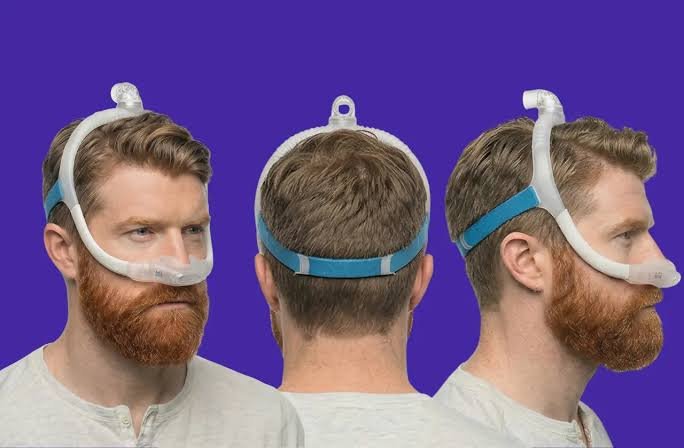
People who use positive airway pressure therapy may have facial hair, which should also be taken into account. Moustaches and beards can influence the fit of a mask against the face, and may have a different effect on the seal around the area of treatment. Although it is true that as long as one has facial hair the CPAP Masks can still be successfully used, the correct mask manufacturing type and fit can still make a huge difference in usage.
Why Facial Hair Can influence the Seal?
The majority of CPAP masks are based on a contact between the cushion and the skin to form an efficient seal. When hair is thick or grows directly under the sealing area, then it will form small crevices between the cushion and the face.
Even minor cracks can enable air to get out. Users might also feel that the air is blowing inside the mask, there is more noise or that it is leaking consistently at night.
Various Beard Styles present Various Problems
The impact of facial hair is determined by the length, thickness and position of the hair. These statements do not hold true because a short beard might not produce the same impact on mask contact as a full, thick beard.
Moustaches may obstruct masks which close along the nose or upper lip, as well. The mask cushion may not be overfitting all users; instead, users might need to take into account the interaction of the mask cushion with the individual facial hair pattern.
Let’s take the Mask Design
Various CPAP Masks have varied sealing areas and designs. Others are covering the nose whereas others are covering the mouth and nose. Nasal pillow-shaped constructions not only touch a smaller region near the nostrils but also might be worth considering with a trained expert in cases of facial hair to a traditional mask opening.
This is aimed at discovering an acceptable design that does not need tightening that is too much.
Do Not over tighten the Straps
Tightening of headgear is a response that is usually followed to mask leaks. Yet, over tightening is not necessarily the solution to the problem. It can cause the face to be placed unnecessarily and make the mask not that comfortable.
The mask washes to be followed by the general fitting instructions of the mask. But when the leaks do not stop even after proper adjustment then the other mask type or size can be put into consideration.
Test The Fit of the mask when lying
Another instance is a mask may seem to fit well in a sitting or standing position but act differently when the wearer lies down. The seal can be influenced with the changes of facial position during sleep, and movement.
Using a standard sleeping posture allows the users to test the mask to determine leaks before going to sleep.
Take Facial Hair Maintenance into account
Some users may find it better to trim facial hair around the sealing area of the mask so as to make the contacts more reliable. But not all people have to shave.
The most effective strategy is based on the facial hair of a person, the mask shape and preference.
Give heed to Continuous Spurts
There might be occasional minor leakages, but in case of persistent or major leaks, these should not be neglected. The users can experience dry mouth, sleep disturbances, mask noise, or frequent waking.
Should not correcting the mask resolve the problem, a competent provider of CPAP equipment may assist in determining the fit and provide advice on options.
Change Faded elements of mask
Mask cushions naturally roll with time. A cushion that has grown or become worn or less elastic might find it harder to seal, especially where facial hair already presents a suitable challenge.
Better mask performance can be facilitated by replacing the components when needed and regularly checking and cleaning the cushion.
Conclusion
Male facial hair may affect the fit of CPAP Masks against the skin of the face, and their ability to generate a seal, but these factors do not always mean that CPAP will not be effective. Regarding mask design, not tightening the straps too tightly, replacing the parts that are worn out or damaged, checking the fit when lying down can all help. In situations where chronic leaks occur, masks can be fitted with professional help to come up with a more viable solution.