 Home
Home

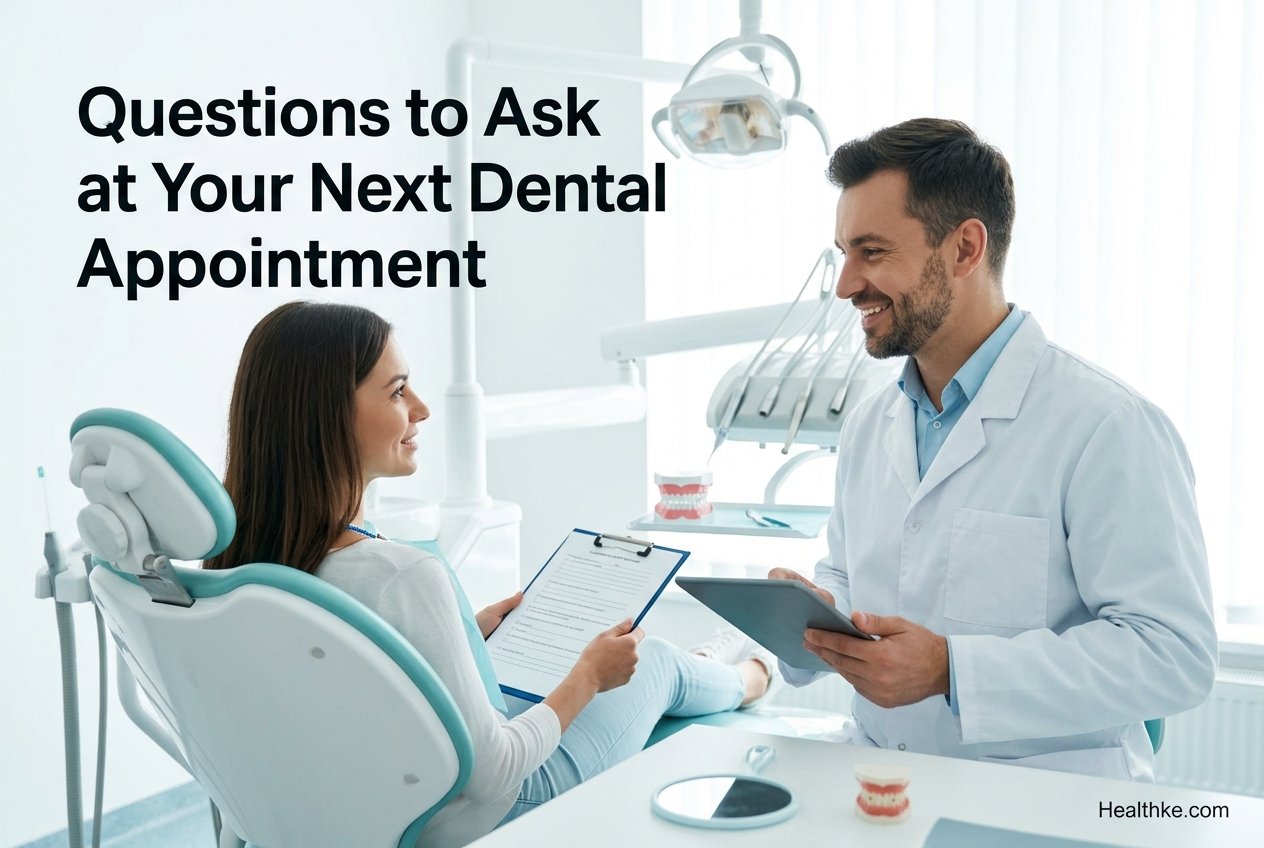
A dental appointment is an opportunity to discuss more than immediate tooth concerns. It can also provide insight into your current oral health and help you plan for future dental care.
Preparing questions before your visit can make it easier to cover important topics. Your dentist can then explain findings, treatment options, preventive measures, and recommended follow-up care.
Whether you are attending a routine examination or discussing a specific concern, asking clear questions can help you make informed decisions about your oral health.
Table of Contents
Questions About Your Oral Health
Start by asking what your dentist observed during the examination. Understanding your current oral health can help you identify areas that may need attention.
Consider asking:
- Are my teeth and gums healthy?
- Did you notice any signs of tooth decay?
- Are there signs of gum disease or other oral health concerns?
- Is my current brushing and flossing routine effective?
- Are there any areas of my oral health that need extra attention?
Your dentist may recommend changes based on your examination and medical or dental history. Ask for specific instructions if you are unsure how to adjust your routine.
Questions About Recommended Treatments
If your dentist suggests a treatment, find out why it is recommended and what you can expect during the procedure. Clear information can help you understand the purpose and expected process.
Useful questions include:
- Why do I need this treatment?
- What happens if I delay or decline it?
- Are there different treatment options?
- What are the potential benefits and risks?
- How many visits might the treatment require?
- Will I need any special care afterward?
Treatment recommendations can vary depending on the condition being addressed. Ask your dentist to explain the available options and how they apply to your circumstances.
Questions About Preventive Care
Preventive care is an important part of maintaining oral health between visits. Your dentist can provide guidance based on your individual needs.
Ask how often you should have routine examinations and professional cleanings. You can also discuss fluoride treatments, dental sealants, and other preventive measures when appropriate.
Other questions might include:
- How often should I schedule routine visits?
- Should I use a particular type of toothbrush?
- Do I need a different toothpaste or fluoride product?
- How often should I floss or clean between my teeth?
- Are there any foods or beverages I should consume less often?
These questions can help you develop a daily oral hygiene routine that fits your needs.
Questions About Dental X-Rays and Exams
Diagnostic tests help your dentist evaluate issues below the surface. To better understand why a test is recommended, consider asking:
- Why is this X-ray or examination necessary today?
- What specific condition or area are you looking to evaluate?
- Is this test part of routine monitoring or related to a specific symptom?
Questions About Treatment Costs
Cost is another practical topic to discuss before starting treatment. Ask for an explanation of the expected fees and whether additional appointments could affect the total cost.
Consider asking:
- How much should I expect to pay for the recommended treatment?
- Are there additional procedures that could affect the cost?
- Does my dental insurance cover any of the costs for this treatment?
- Are payment options available?
- Will follow-up visits involve additional fees?
If you have insurance, confirm coverage details with your provider and dental office. Coverage can vary according to your plan and the specific procedure.
Take Charge of Your Oral Health
You don’t need to ask every question on this list, simply focus on the topics that match your current health concerns, recommended treatments, or budget. Bringing a tailored list to your next visit ensures a productive conversation and helps you make confident decisions about your oral care.
Ready for your checkup? Schedule your next dental appointment today and bring your top questions with you.