
 Home
Home

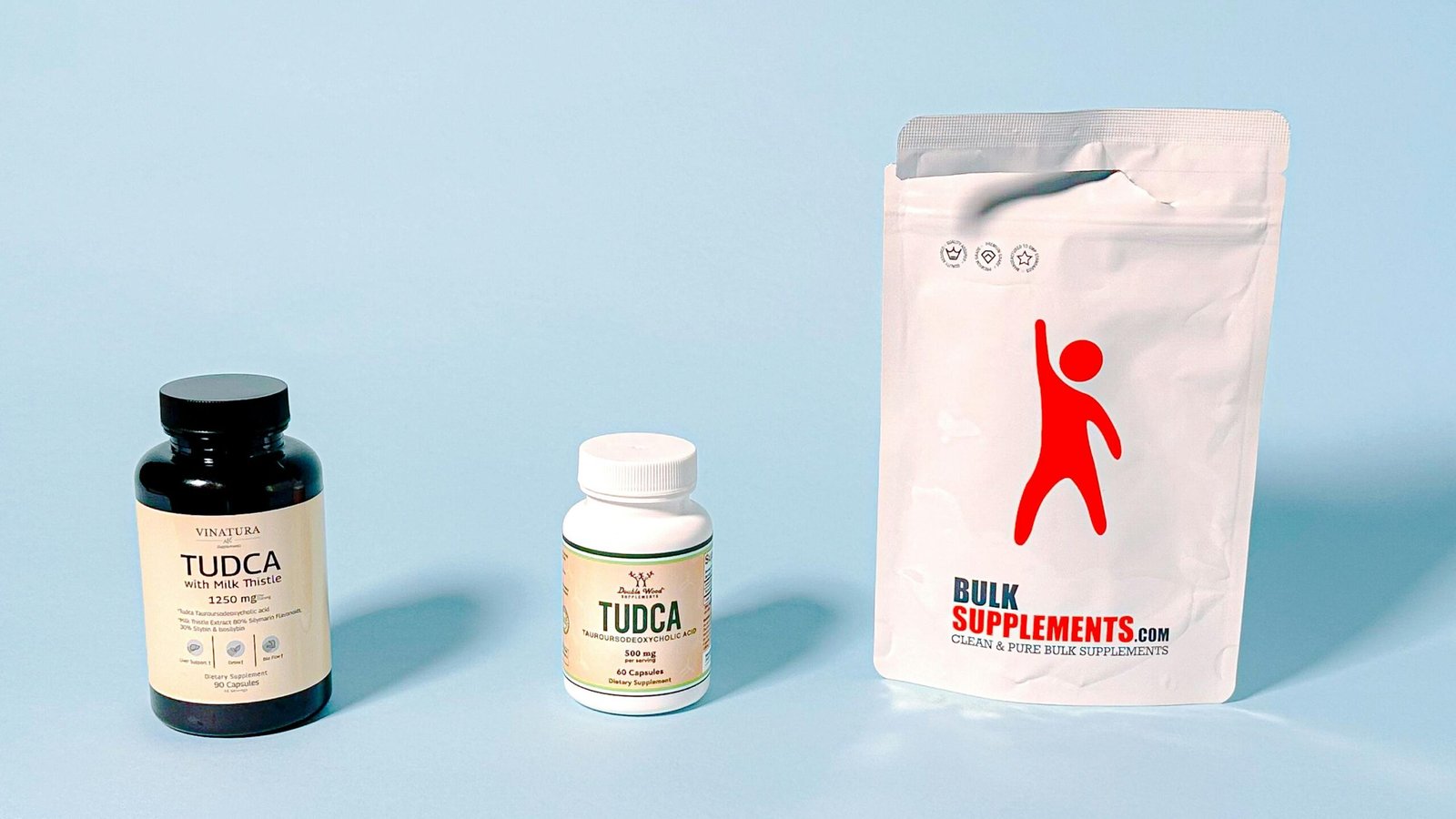
Walk into almost any supplement store looking for liver support and you’ll quickly discover that there isn’t one standard formula.
One bottle might contain milk thistle. Another might feature NAC. A third might contain TUDCA. Others combine several herbs, vitamins and antioxidants into a single capsule.
The labels can make these products sound broadly interchangeable, but they aren’t.
TUDCA, N-acetyl cysteine (NAC) and milk thistle represent different approaches to liver support. They have different origins, different mechanisms and different levels of human evidence behind them.
That doesn’t mean one ingredient is automatically right for everyone. It means that comparing them requires looking beyond the words “liver support” on the front of the bottle.
If you’re considering one of these products, understanding what you’re actually comparing is a much better starting point than choosing whichever bottle makes the biggest claim.
Why Liver Supplements Are So Difficult to Compare
The first problem is that “liver support” isn’t a single biological function.
The liver is involved in metabolism, bile production, nutrient processing, protein synthesis and the handling of numerous compounds that enter the bloodstream.
As a result, supplement companies can approach the category from very different directions.
One formula might emphasise antioxidant activity. Another might focus on bile acids. Another might use traditional herbal ingredients.
All three can be marketed for the same broad purpose while containing almost nothing in common.
This is why ingredient-level comparison matters.
Instead of asking, “Which liver supplement is best?” a more useful question is:
What is this ingredient actually intended to do, and how good is the evidence behind that particular use?
TUDCA: A Bile Acid Approach
TUDCA, short for tauroursodeoxycholic acid, is a taurine-conjugated bile acid.
That immediately sets it apart from plant-based products such as milk thistle.
Rather than being an herbal extract, TUDCA is a specific compound related to bile acid biology. It has attracted interest in research involving cellular stress, bile acid handling and metabolic function.
One human randomized trial published in Diabetes investigated TUDCA in 20 people with obesity over four weeks. Participants received 1,750 mg per day, and the researchers reported increased hepatic and muscle insulin sensitivity compared with placebo.
There is an important qualification, however.
A study using 1,750 mg per day should not automatically be interpreted as evidence that a much smaller commercial serving produces the same result.
This is one of the most important details to look for when comparing supplement products: the ingredient studied and the dose studied are not necessarily the same as the ingredient and dose on the bottle.
What Makes TUDCA Different?
The main appeal of TUDCA is that it represents a defined compound rather than a broad herbal blend.
That can make the label easier to interpret.
If a capsule contains 500 mg of TUDCA, you know what the stated active ingredient is and how much is being provided.
That is different from a product containing a long list of herbs with a combined proprietary blend.
TUDCA therefore tends to appeal to people who prefer a more targeted formulation.
NAC: Supporting Glutathione Production
N-acetyl cysteine, or NAC, takes a different route.
NAC is a derivative of the amino acid cysteine and is commonly discussed in relation to glutathione, one of the body’s important antioxidant systems.
Rather than supplying glutathione directly, NAC provides a source of cysteine that the body can use in glutathione synthesis.
This makes NAC particularly interesting when comparing it with products that contain glutathione itself.
NAC vs Glutathione
These products are sometimes treated as if they’re interchangeable because they are connected through the same antioxidant system.
They’re not identical.
A glutathione supplement provides glutathione directly, while NAC acts further upstream as a precursor.
That distinction can be useful when reading supplement labels.
If a product contains NAC, you’re looking at a precursor-based approach.
If it contains reduced L-glutathione, you’re looking at direct supplementation with glutathione.
Neither description automatically makes a product superior. They simply represent different strategies.
Why People Choose NAC
NAC has a long history of medical and research use, including applications that are very different from ordinary wellness supplementation.
That history makes it a particularly well-known compound, but it also means consumers should avoid assuming that evidence in one clinical context automatically translates into evidence for every proposed use.
The question isn’t simply whether NAC has been studied.
It’s what was studied, in whom, at what dose and for what outcome?
That’s a much more useful way to evaluate it.
Milk Thistle: The Traditional Herbal Option
Milk thistle, or Silybum marianum, is probably the most familiar of the three to shoppers browsing Australian pharmacies and health-food stores.
Its main active compounds are collectively referred to as silymarin.
Milk thistle has been used traditionally for liver-related purposes for a long time, which partly explains why it remains such a common ingredient in modern liver-support formulas.
But popularity and clinical evidence aren’t the same thing.
A large randomized controlled trial published in JAMA examined silymarin in people with chronic hepatitis C who had previously failed interferon-based treatment. Participants received either 420 mg or 700 mg three times daily, or placebo, for 24 weeks. The study found that neither silymarin dose significantly reduced ALT levels more than placebo.
That doesn’t prove that milk thistle has no biological activity or that every possible use has been disproven.
It does demonstrate why broad statements such as “milk thistle improves liver function” need to be treated carefully.
The evidence depends on the population, formulation, dose and outcome being studied.
The “35,000mg” Problem
Australian shoppers may also encounter milk thistle products displaying very large numbers such as 35,000 mg.
At first glance, that can appear dramatically higher than a TUDCA or NAC dose.
But the numbers aren’t directly comparable.
Milk thistle products commonly use dry-herb equivalence on their labels. In other words, the large number can represent the amount of raw plant material that the extract is considered equivalent to, rather than 35,000 mg of purified silymarin sitting inside the tablet.
This is an important lesson when comparing supplements:
Never compare milligram numbers without first checking what the milligrams actually represent.
A 35,000 mg herbal equivalence figure and a 500 mg defined compound are measuring different things.
Looking only at the biggest number on the label can therefore produce a completely misleading comparison.
TUDCA vs NAC vs Milk Thistle at a Glance
| Factor | TUDCA | NAC | Milk Thistle |
| Type | Bile acid derivative | Cysteine precursor | Botanical extract |
| Common focus | Bile acid and metabolic pathways | Glutathione precursor | Silymarin / herbal liver support |
| Single defined compound? | Yes | Yes | No — botanical extract |
| Common label confusion | Comparing commercial dose with research dose | Assuming it is the same as glutathione | Dry-herb equivalence numbers |
| Main comparison question | What dose is actually provided? | What outcome is being targeted? | What extract and silymarin content are provided? |
| Evidence interpretation | Human research exists, but doses and outcomes matter | Evidence varies greatly by use | Human evidence is mixed and condition-specific |
The table is more useful as a framework than as a ranking.
There isn’t a universal winner because the ingredients aren’t doing the same thing.
Why Dose Matters More Than the Front Label
Once you’ve narrowed down an ingredient, the next step is examining the dose.
This is where supplement comparisons often become difficult.
Consider two products containing the same ingredient.
Product A provides 250 mg per capsule.
Product B provides 500 mg per capsule.
If both bottles contain 60 capsules, they aren’t equivalent simply because both say the same ingredient on the label.
Product A contains 15,000 mg of the ingredient across the bottle.
Product B contains 30,000 mg.
But even that calculation doesn’t tell you which product is appropriate. You still need to consider the recommended serving and how the available dose compares with the research you’re using to evaluate the ingredient.
This is particularly important with TUDCA, where some human research has used doses considerably higher than the amount found in many consumer products.
A good comparison therefore asks three separate questions:
What does the bottle contain?
What does the label recommend?
What dose has actually been studied for the outcome I’m interested in?
Keeping those questions separate prevents a lot of confusion.
Single Ingredients vs Combination Formulas
There is another choice consumers face: buying a single-ingredient product or choosing a formula containing several ingredients.
A combination formula can be convenient.
Instead of purchasing separate bottles, you might get several ingredients in one serving.
But combination formulas can also make evaluation more difficult.
If a product contains eight ingredients, you need to determine how much of each ingredient it actually provides.
A proprietary blend can make this even harder if the label gives only one combined quantity.
Single-ingredient products are often simpler to evaluate because the active dose is immediately visible.
That doesn’t make combination products inherently inferior. It simply means they should be assessed differently.
Don’t Confuse a Supplement Comparison With Medical Treatment
This distinction is especially important with liver-related products.
Someone with an abnormal ALT result, jaundice, persistent abdominal symptoms or a diagnosed liver condition should not assume that comparing supplements is the appropriate first step.
A supplement may be something a person chooses to discuss with a healthcare professional, but it shouldn’t be used to self-diagnose a liver problem.
This is also why claims such as “detoxes the liver,” “cleans fatty liver” or “repairs liver damage” deserve skepticism.
A supplement comparison can tell you what’s inside a product.
It cannot tell you why your liver blood results are abnormal or whether you have an underlying disease.
How to Compare Products in the Real World
Once you’ve decided which type of ingredient interests you, product comparison becomes much easier.
Start with five things.
1. Identify the actual active ingredient
Don’t rely entirely on the product name.
Read the Supplement Facts or ingredient panel and determine exactly what form is present.
2. Check the amount per serving
Don’t confuse the number of capsules in the bottle with the amount of active ingredient.
Calculate the actual daily serving.
3. Look at the evidence for that ingredient
Ask whether human research exists and whether it investigated the outcome you’re interested in.
4. Calculate the daily cost
A $60 bottle isn’t necessarily more expensive than a $30 bottle.
Divide the price by the number of actual servings.
5. Consider quality and availability
Clear labelling, appropriate testing, reputable manufacturing and reliable availability all matter.
A theoretically attractive product isn’t particularly useful if you can’t consistently obtain it or don’t know exactly what you’re taking.
Where Australian Shoppers Can Start
Once you understand these differences, comparing actual products becomes much less confusing.
Instead of looking for a single bottle that claims to support every aspect of liver health, you can compare products according to their active ingredients, doses, formulation and practical cost.
For Australian shoppers who want to see how those factors translate into actual products, this comparison of liver support supplements available in Australia examines several formulations side by side, including TUDCA, NAC, milk thistle and glutathione, while also looking at Australian availability and cost per day.
That kind of comparison is most useful after you’ve understood the underlying differences between the ingredients. Otherwise, it is easy to compare products based on bottle size, marketing claims or impressive-looking numbers rather than what you’re actually buying.
The Bottom Line
TUDCA, NAC and milk thistle are often placed into the same broad category, but they aren’t interchangeable ingredients.
TUDCA represents a bile-acid-based approach.
NAC provides a precursor route related to glutathione production.
Milk thistle supplies a botanical extract centred around silymarin.
Each has a different evidence base, and each needs to be judged according to the specific outcome being considered.
The smartest way to compare them isn’t to ask which ingredient sounds most impressive.
Look at the actual compound, the dose, the quality of the evidence, the formulation and the cost of using it consistently.
And when the question isn’t simply about general wellness but about symptoms, abnormal blood tests or a diagnosed liver condition, the supplement aisle shouldn’t be the place where the diagnosis begins.