
 Home
Home

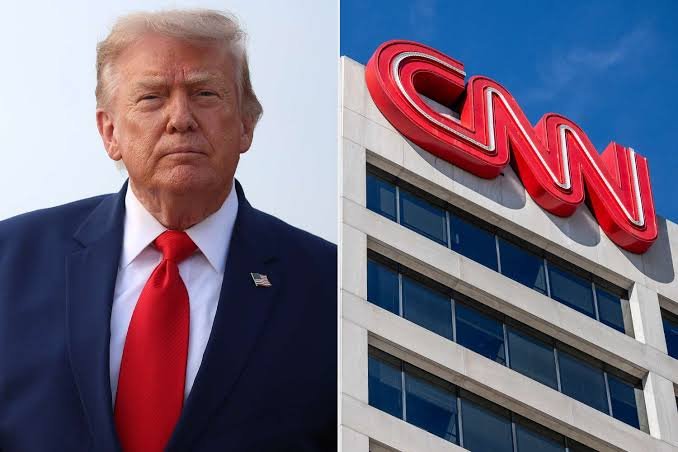
President Donald Trump announced on September 18 that he was banning CNN, MS NOW and Politico from the White House, accusing the outlets of biased coverage. In a Truth Social post, Trump said the outlets “shouldn’t be able to constantly write or report FICTION and LIES when they’re covering the President of the United States.”
Table of Contents
What Happened
Trump framed the move as a response to what he called the outlets’ “constant ‘reporting’ FAKE NEWS,” and warned that other news organizations could face similar bans in the future. The ban took effect almost immediately. MS NOW said its journalists “were denied access to the White House grounds” the following Saturday morning. Reporters from all three outlets — MS NOW’s Akayla Gardner, CNN’s Betsy Klein and Politico’s Cheyenne Haslett — were turned away from the White House the day after the announcement.
The decision reportedly caught even senior White House aides off guard, with chief of staff Susie Wiles not present when it was announced, according to officials who spoke to NBC News. Trump had reportedly considered banning specific outlets earlier in his term but had previously been talked out of it.
Industry Pushback
The response from media organizations was swift and unified. On September 21, the three outlets filed a lawsuit in federal court, and major television networks banded together to halt pool video coverage of the president in protest. CNN, MS NOW and Politico filed an emergency First Amendment lawsuit asking a federal court to immediately restore their journalists’ access.
“This ban could not be a more direct assault on the First Amendment nor a more blatant violation of our most fundamental constitutional principles.”
The outlets are asking a federal judge to hold the president accountable for what they describe as a violation of their constitutional rights simply because he dislikes how they cover him. A hearing on their request for a temporary restraining order was scheduled before the DC District Court.
Individually, the outlets also spoke out. CNN said an outright ban would represent an illegal assault on constitutionally protected rights, while Politico pledged to keep covering the White House fairly and rejected a separate Trump claim that it receives government subsidies, calling that false. Civil liberties groups weighed in as well — an ACLU lawyer told CNBC that the organization believes the ban is unconstitutional, arguing it discriminates against outlets based on their coverage.
Trump’s Defense
Trump has continued to defend the decision publicly. He posted on Truth Social that “The White House is not instituting an assault on the Free Press, something which I cherish. It is instituting an assault on the FAKE NEWS, something that has grown like Cancer in our beloved United States of America,” calling it “corrupt, purposeful, pervasive, fully coordinated, and totally out of control.”
When New York City Mayor Zohran Mamdani raised objections to the ban during a joint press appearance, Trump responded by defending the policy, saying he believes outlets have “an obligation to be fair,” and that if they are “fake news,” he has “an obligation not to allow them into another very special house.”
Part of a Broader Pattern
This is not Trump’s first clash with the press over access. Shortly after taking office, he banned the Associated Press from the Oval Office, Air Force One and other events after the wire service declined to adopt his renaming of the Gulf of Mexico to the “Gulf of America.” The AP subsequently sued, and that case remains ongoing. Trump has also pursued defamation lawsuits against outlets including the BBC, The New York Times and The Wall Street Journal; the suits against the Times and the Journal were dismissed and later refiled, while the BBC has moved to have its case thrown out.
What’s Next
In the wake of the ban and the networks’ coordinated halt of video coverage, a competing outlet describing itself as “Trump TV” has launched. The legal fight is moving quickly through the courts, with a hearing on the outlets’ request for emergency relief expected imminently. The outcome could set a significant precedent for how far a White House can go in restricting press access based on the content of an outlet’s coverage.